





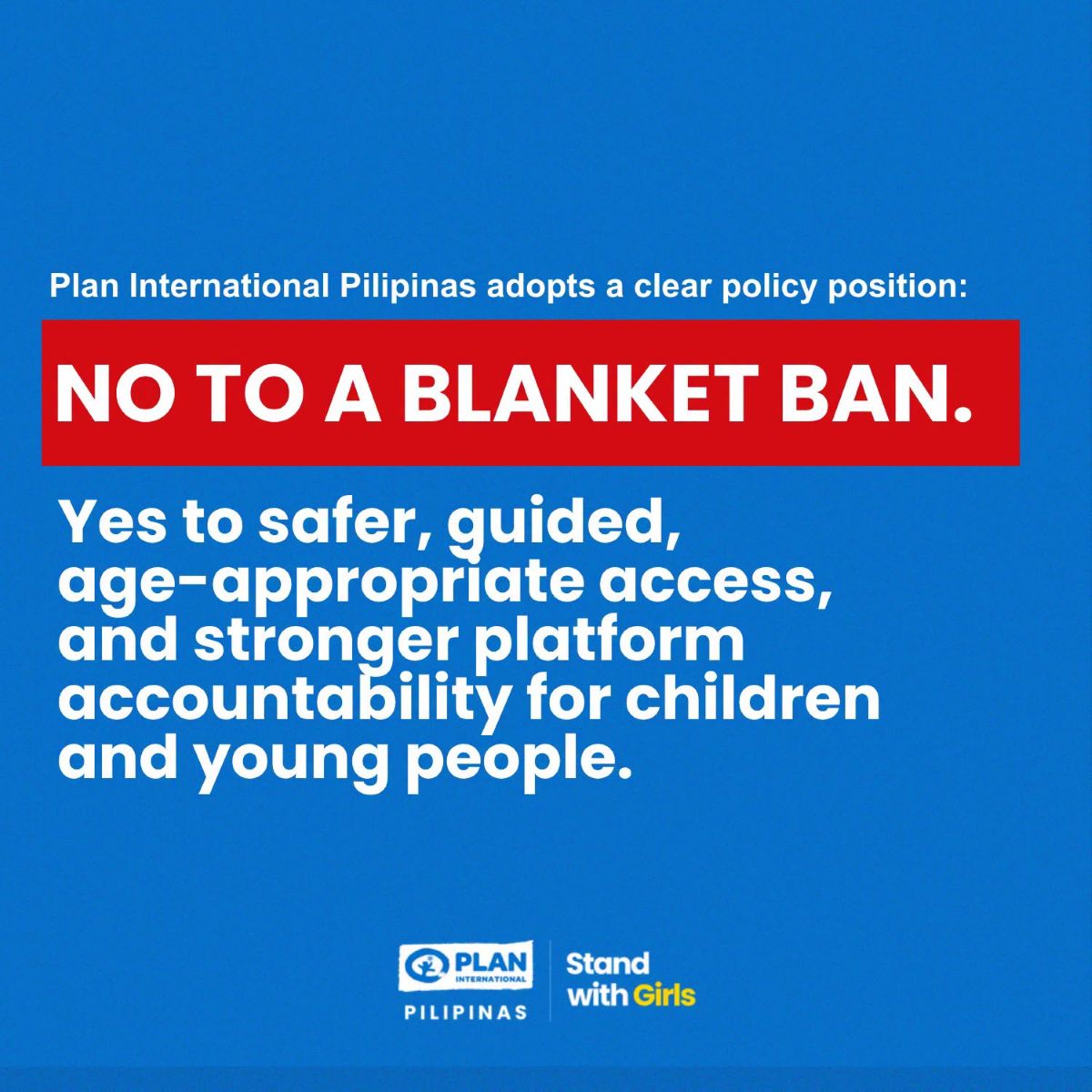
Filipino youth are calling for stronger online safety protections rather than a complete ban on social media, highlighting the need for safer digital platforms, age-appropriate safeguards, and greater accountability from technology companies.
According to a 2026 consultation by Plan International Pilipinas, 63% of respondents favored conditional social media access with safeguards, while 29% supported an outright ban and 7% opposed a ban entirely. The consultation gathered responses from 164 participants through an online survey and a focus group discussion with 13 members of the organization’s Youth Advisory Group.
The findings are consistent with an earlier Plan International Pilipinas landscape assessment involving 590 participants, which examined how children and young people use digital platforms and the risks they encounter online.
The assessment found that digital platforms play an important role in young people’s daily lives, particularly for communication, education, learning, leisure, and social connection. However, respondents also identified concerns involving cyberbullying, inappropriate content, scams, privacy violations, online exploitation, and excessive screen time.
To address these risks, young people called for stronger platform safeguards, including age-appropriate content filters, improved privacy settings, effective reporting mechanisms, safer platform design, parental guidance, and better digital literacy programs.
The earlier assessment also identified TikTok as the most frequently perceived child-friendly social media application, cited by 40.7% of respondents, followed by Facebook at 32.2%, Instagram at 16.1%, and Snapchat at 11%.
Sheila Estabillo, project manager of Plan International Pilipinas, emphasized that the goal should not be to remove teenagers from digital environments but to equip them with the practical skills to navigate online spaces safely, critically, and responsibly.
Plan International Pilipinas stressed that online safety requires shared responsibility among families, schools, government agencies, communities, civil society organizations, and technology companies.
The findings highlight the importance of combining digital literacy, appropriate regulation, age-appropriate technology design, and stronger platform accountability to protect young users while preserving their access to digital opportunities for learning, communication, creativity, and participation.

Plan International Pilipinas’ assessment found that 63% of respondents favored conditional social media access for children under 16, calling for age-appropriate safeguards, parental guidance, safer digital environments, and greater accountability from technology platforms.