





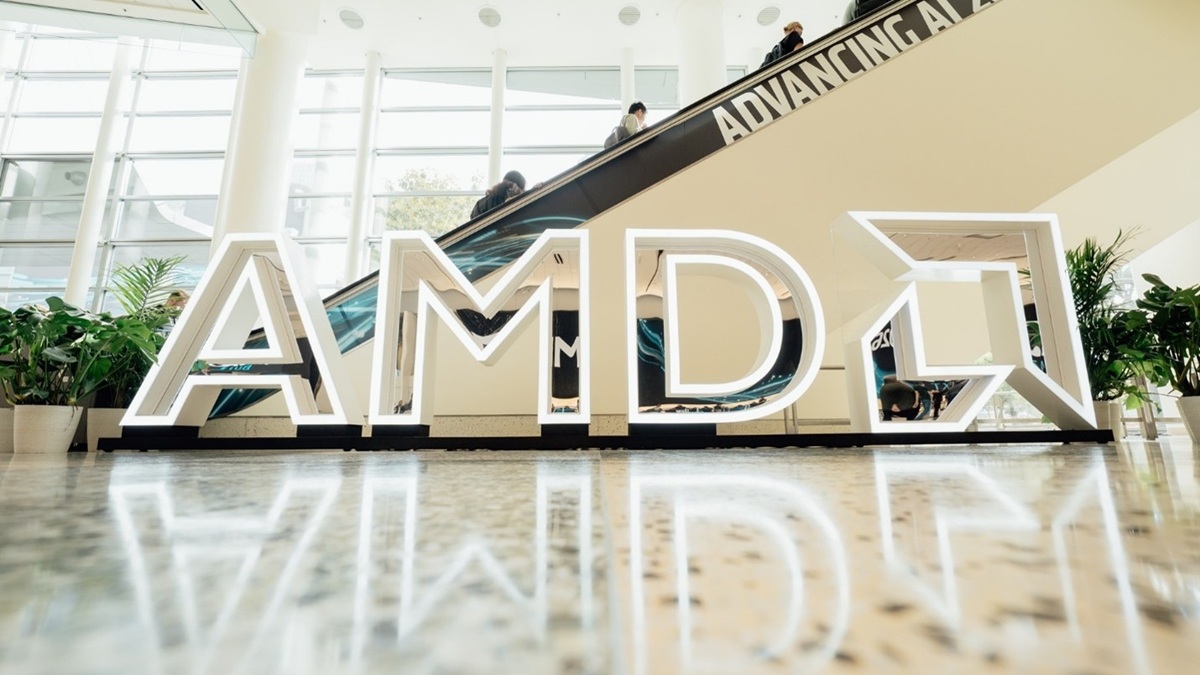
AMD has introduced its next-generation AI infrastructure portfolio at its Advancing AI 2026 event, headlined by the new AMD Helios rack-scale AI solution designed to power large-scale AI training, inference, agentic AI, and physical AI applications.
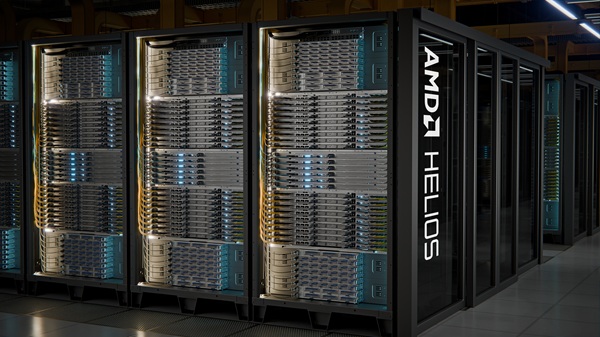

The company said the Helios platform is now in production and is being adopted by leading AI companies for deployments at gigawatt scale. As AI workloads evolve beyond model training to include real-time inference and autonomous agents, AMD is positioning its open AI ecosystem as an alternative for organizations seeking high-performance and flexible AI infrastructure.
At the core of the Helios system are 72 AMD Instinct MI455X GPUs and 18 sixth-generation AMD EPYC “Venice” processors, connected through AMD Pensando networking technologies and accelerated by the AMD ROCm open software platform. AMD claims the rack-scale solution delivers up to 30% more tokens per dollar compared with competing platforms.
AMD Chair and CEO Dr. Lisa Su said the next phase of AI will be driven by frontier models, AI agents, and physical AI systems, creating opportunities to bring intelligence across industries and environments. She emphasized the importance of open platforms and industry collaboration in scaling AI from data centers to edge environments.
Several major AI companies and cloud providers have committed to deploying the AMD Helios platform, including OpenAI, Anthropic, Meta, Microsoft, Oracle, HUMAIN, TensorWave, Vultr, and Cirrascale. Hardware and infrastructure support will come from OEM partners such as Lenovo, HPE, Supermicro, Bull, Sanmina, and Wiwynn.
AMD also announced expanded collaborations with key AI industry players:
- Anthropic will deploy up to two gigawatts of AMD Instinct MI455X GPUs through AMD Helios systems as part of a multi-year engineering partnership. The companies will also use Anthropic’s Claude AI model to accelerate AMD software development and optimize workloads for AMD GPUs.
- OpenAI is working with AMD to optimize the AI stack from hardware to software. OpenAI plans to begin bringing Helios systems online in the fourth quarter of 2026, with broader deployments expected throughout 2027.
- Meta is collaborating with AMD on gigawatt-scale AI deployments and has started validating sixth-generation EPYC processors and testing Helios racks for future large-scale implementation.
- Cerebras is partnering with AMD to combine low-latency AI computing with Helios infrastructure, aiming to improve the efficiency and scalability of AI inference workloads.
The announcement underscores intensifying competition in AI infrastructure as technology companies race to build platforms capable of supporting the growing demands of generative AI, agentic AI systems, and future physical AI applications.