





Alibaba Cloud launches agent-native AI technologies to power enterprise automation
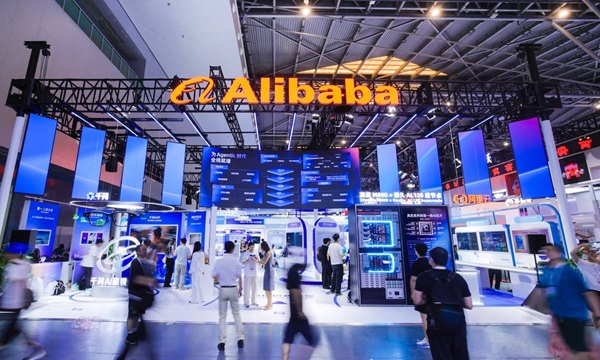
Alibaba Cloud introduced a new suite of agent-native AI technologies at the World Artificial Intelligence Conference (WAIC) 2026, expanding its full-stack AI ecosystem with new infrastructure, development tools, and wearable AI devices designed to accelerate enterprise adoption of autonomous AI agents.
The company unveiled its Agent-Native Cloud suite, which enables organizations to build, deploy, govern, and optimize AI agents throughout their lifecycle. The platform introduces AgentLoop for real-time monitoring and optimization, AgentTeams for orchestrating multi-agent workflows, and AgentRun for managing AI agent development, deployment, and operations.
To improve large language model performance, Alibaba Cloud also launched TokenWorks, a new inference optimization service within its Platform for AI (PAI). The service combines request routing, scheduling, inference execution, and compute reuse into a unified system to reduce costs, improve reliability, and increase inference efficiency.
On the AI model front, Alibaba unveiled the Qwen 3.8-Max-Preview, a 2.4-trillion-parameter large language model that the company said delivers performance comparable to leading frontier AI systems. Alibaba also announced that the Qwen 3.8-Max model will soon be released with open weights, reinforcing its commitment to open AI development.
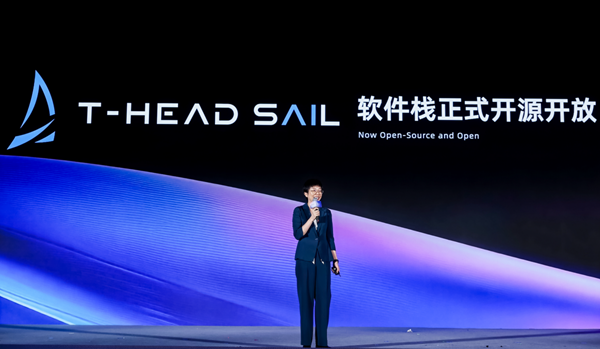
Alibaba’s semiconductor division, T-Head, expanded its open-source strategy by releasing the T-Head SAIL AI software stack, giving developers access to its computing framework, software development kits, operating system support, and performance optimization tools. The software is optimized for the company’s Zhenwu AI chips, which have shipped more than 560,000 units across over 400 customers in more than 20 industries.
The company also introduced a team version of Meoo, its AI-powered application development platform that allows users to create websites, applications, and WeChat mini-programs using natural language. New enterprise features include centralized billing, team collaboration, shared assets, and automated frontend, backend, and database deployment.
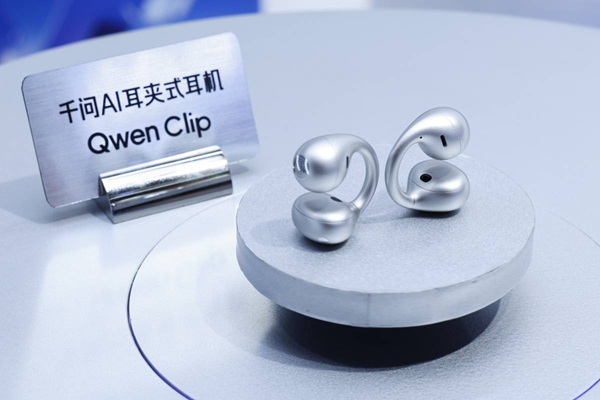
Expanding into AI hardware, Alibaba launched Qwen Clip, its first AI-powered open-ear earbuds built on the Qwen large language model and co-developed with Bose. The wearable supports real-time translation, meeting transcription, health tracking, and voice-based AI assistance.
Alibaba also previewed the next generation of its AI glasses, now evolving into agent glasses capable of interacting with third-party AI agents. Future capabilities will include full-duplex voice interaction, eye tracking, and biometric sensing.
The announcements underscore Alibaba Cloud’s strategy of building an end-to-end AI ecosystem spanning chips, cloud infrastructure, AI models, developer platforms, and intelligent devices to support the growing adoption of agentic AI across industries.