






NVIDIA has unveiled Cosmos 3 Edge, a new AI world model designed to bring real-time vision reasoning and robot intelligence to edge devices, while announcing broad adoption of its physical AI platform by Japan’s robotics, manufacturing, and industrial technology leaders.
Built on NVIDIA Nemotron™, the 4-billion-parameter Cosmos 3 Edge model enables robots and AI-powered vision systems to understand their surroundings, reason locally, and generate actions in real time on NVIDIA Jetson™ edge computers. The model can be customized for specific robots, vehicles, and environments in about a day using the open NVIDIA Cosmos framework.
The company also introduced new NVIDIA Metropolis libraries and AI coding skills that accelerate the development of video intelligence systems, enabling developers to build and deploy vision AI applications significantly faster.
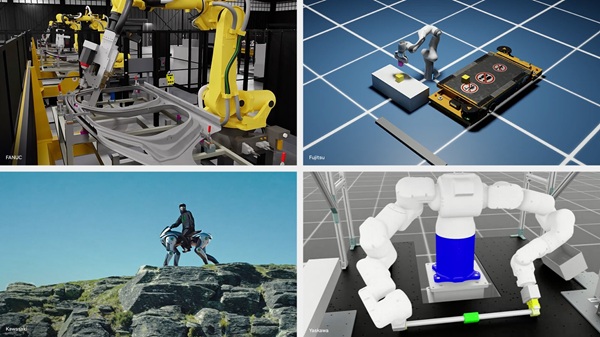
NVIDIA is expanding its Cosmos Coalition to Japan, bringing together leading companies—including FANUC, Fujitsu, Hitachi, Honda R&D, Kawasaki Heavy Industries, Kubota, NEC, Preferred Networks, SoftBank, Sony Group, TIER IV, Yaskawa Electric, and others—to advance open world models for physical AI.
The coalition aims to develop AI models that can simulate and optimize robots and autonomous systems before real-world deployment, helping reduce development time across industries such as manufacturing, logistics, healthcare, construction, agriculture, retail, and transportation.
Several Japanese companies are already integrating NVIDIA’s physical AI technologies into their operations. Fujitsu is collaborating with industrial robotics firms to build AI-powered manufacturing platforms, while SoftBank is developing a physical AI platform using Cosmos, Omniverse, and Isaac Sim alongside AI-RAN technologies. Companies including Mujin, Kubota, Kawasaki Heavy Industries, Telexistence, and GROOVE X are also applying NVIDIA’s AI stack to autonomous robotics, smart farming, industrial automation, retail automation, and companion robots.
The announcement reinforces NVIDIA’s strategy of extending AI beyond cloud computing into intelligent machines, factories, infrastructure, and autonomous systems, positioning Japan as a key hub for the next generation of physical AI innovation.