







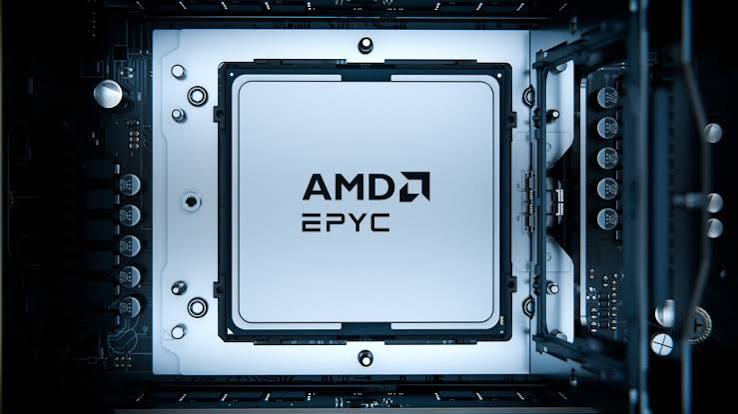
AMD is positioning its 6th Gen EPYC 9006 “Venice” server processors for the increasingly varied computing demands of agentic AI, where a single request can trigger multiple tasks including data retrieval, tool calls, code execution, and inference.
Unlike traditional AI infrastructure designed primarily around training or inference, agentic workflows can shift between different types of computing requirements during a single execution. AMD says this makes CPU flexibility and workload optimization increasingly important for enterprise infrastructure.
In a new white paper, AMD evaluates the EPYC 9006 series across general-purpose, enterprise, cloud-native, AI, and high-performance computing workloads.
AMD reports that its EPYC 9996 processor achieved 1.2 times the per-core performance and 2.24 times the platform-level performance of an Nvidia Vera-based platform in SPECrate 2026 Integer testing. The company also reports performance gains of 2.4x to 3.7x across selected enterprise and cloud-native workloads, including Java, OpenSSL, MongoDB, Redis, NGINX, and transaction processing.
Against Intel’s Xeon 6980P, AMD reports 1.8x to 3.13x performance advantages in selected workloads involving molecular dynamics, materials modeling, and weather forecasting. In a modeled 100-kilowatt rack, AMD estimates up to 3.4 times the throughput of a Vera-based platform.
AMD says the Venice family is designed to give organizations flexibility across different infrastructure roles, ranging from 8-core edge systems to 256-core processors and rack-scale AI host nodes, while maintaining a common software foundation.
The EPYC 9006 series is already in production, according to AMD, with major OEM platforms expected to launch and leading cloud providers beginning deployments later in 2026.