







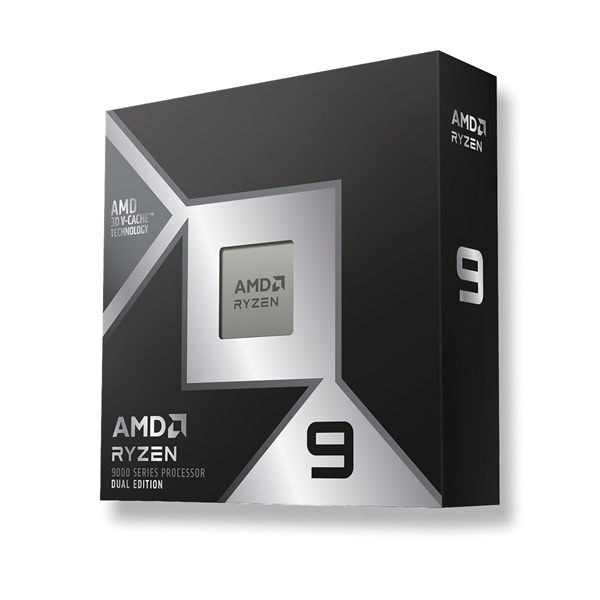
Advanced Micro Devices (AMD) has unveiled the Ryzen 9 9950X3D2 Dual Edition processor, the first desktop CPU to feature dual AMD 3D V-Cache technology, marking a major leap in performance for developers, creators, and gamers.
Built on the latest “Zen 5” architecture and a 4nm process, the new processor integrates second-generation 3D V-Cache across all 16 cores, delivering a massive 208MB of total cache. This expanded cache reduces latency and improves responsiveness, enabling faster data access and smoother performance in demanding workloads.
The Ryzen 9 9950X3D2 features 16 cores and 32 threads, with boost speeds of up to 5.6 GHz. Designed for intensive applications such as large-scale simulations, code compilation, and content creation, the processor enhances throughput while minimizing memory bottlenecks.
AMD’s latest innovation builds on its earlier breakthroughs, including the Ryzen 7 5800X3D—the first processor to introduce 3D V-Cache—and the Ryzen 9 7950X3D, which brought the technology to a 16-core platform. The new dual-cache design further improves thermal efficiency and sustained performance by repositioning the cache beneath the cores.
Performance gains are evident across creator and development tools. Compared to previous-generation chips, the Ryzen 9 9950X3D2 shows average improvements of 5% to 8% in workloads using applications like DaVinci Resolve, Blender, Unreal Engine, and Chromium.
The processor is also optimized for next-generation gaming and content creation systems. Alienware is among the first to bring the chip to market through its Area-51 desktop, leveraging advanced thermal engineering to maximize performance.
Priced at $899, the Ryzen 9 9950X3D2 Dual Edition is available through major retailers and OEM partners. With support for AM5 platforms, it offers a straightforward upgrade path for users seeking cutting-edge computing power.
As AMD continues to push processor innovation, the Ryzen 9 9950X3D2 Dual Edition sets a new benchmark for desktop performance—combining advanced architecture, massive cache capacity, and next-generation efficiency for high-performance workloads.