







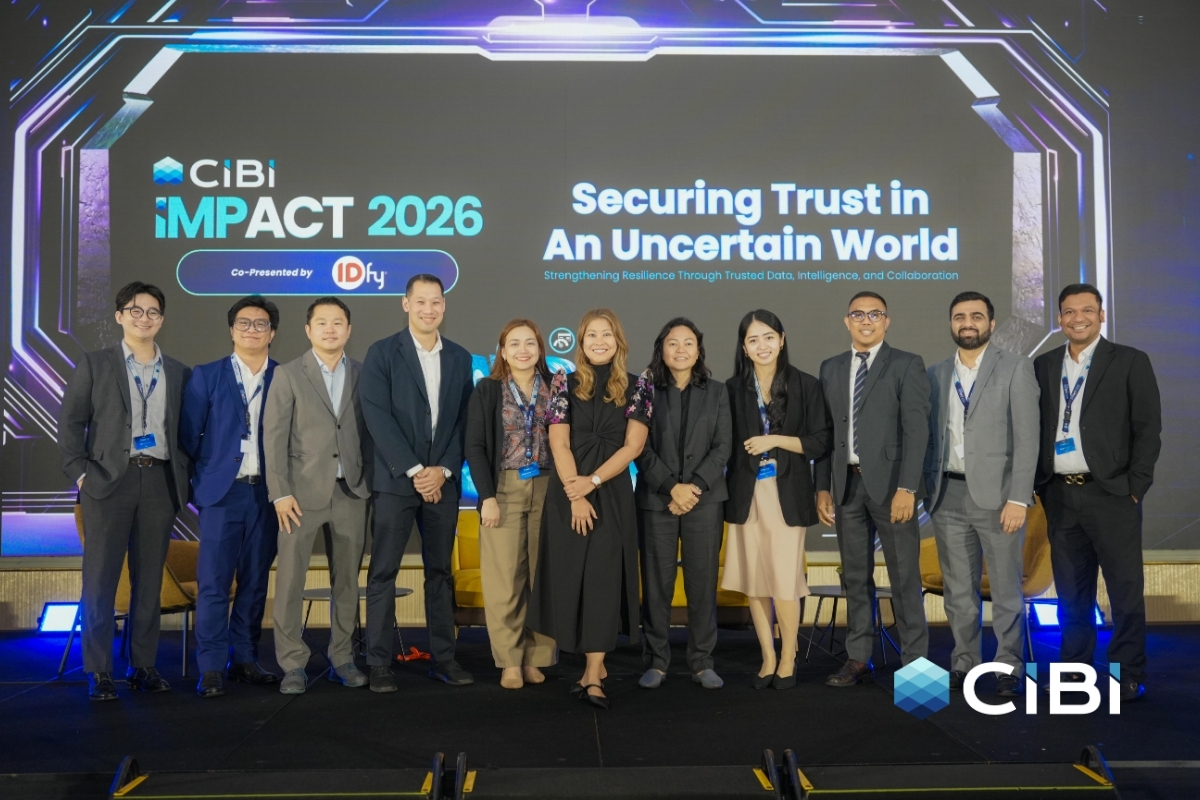
Philippine businesses are generating more data than ever, but having greater access to information does not automatically lead to better decisions as companies navigate economic uncertainty, geopolitical shifts and rapid technological change.
The growing use of artificial intelligence (AI) is making the quality and context of business data even more critical. While AI can process information, identify patterns and accelerate decisions, business leaders remain responsible for evaluating risks and determining how technology-driven insights should be acted upon.

“Simply having more data isn’t the answer. What matters is having the right data, with enough depth, breadth, and context to see the whole picture,” said Pia Arellano, President and CEO of CIBI Information Inc.
During a panel discussion, industry leaders highlighted the importance of combining credible information with human judgment, particularly for high-stakes decisions involving investments, business partners, employees and AI deployment.
Rene Buenaventura, President of Pin An Holdings Corporation and Cliveden Management Corporation, warned that technology can amplify mistakes when it is not supported by proper oversight.
“Speed must be accompanied by accountability, automation must be accompanied by oversight, and intelligence must be accompanied by judgment,” he said.
Francis Estrada, Chairman of CIBI, similarly emphasized that algorithms can process data and systems can flag potential risks, but people remain responsible for deciding how to respond.
The discussion underscores a growing business priority: building decision-making systems that combine reliable data, technology and human accountability. As organizations increasingly rely on AI, the ability to understand information in context—and recognize its limitations—could become a critical component of business resilience.
“Trust is not a soft concept. It is a fundamental piece of economic infrastructure,” Estrada said.