







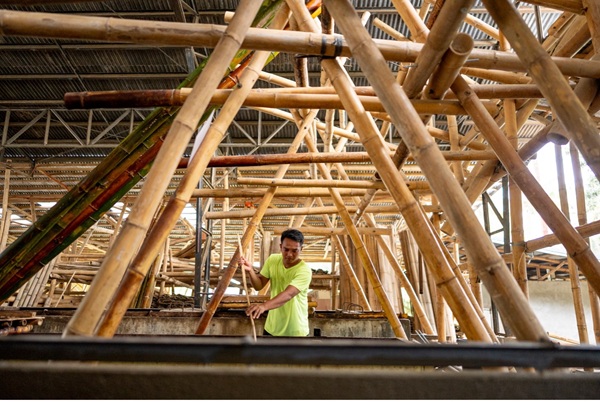
Philippine non-profit Base Bahay Foundation, Inc. (BASE) is accelerating the adoption of engineered bamboo technologies as the construction industry seeks lower-carbon building solutions and sustainable alternatives to conventional materials.
Despite bamboo being one of the world’s fastest-growing renewable resources, it remains largely absent from urban construction projects in the Philippines. BASE says the challenge is not the material itself, but the lack of a supporting industrial ecosystem capable of integrating bamboo into modern building practices.
To address this gap, the organization has developed Cement-Bamboo Frame Technology (CBFT), an engineered construction system designed to deliver consistent structural performance while meeting modern engineering and regulatory standards. The technology is supported by rigorous testing, treatment processes, and standardized building components aimed at making bamboo a viable material for large-scale construction.
Beyond technology development, BASE is also strengthening bamboo adoption through supply chain modernization and workforce training. Its initiatives include partnerships to establish bamboo harvesting, treatment, and prefabrication facilities, as well as the Bamboo Academy, which trains architects, engineers, and construction professionals in advanced bamboo design and building techniques.
The move comes as the real estate sector faces increasing pressure to meet Environmental, Social, and Governance (ESG) targets and reduce embodied carbon emissions. With bamboo reaching maturity in just three to five years and naturally sequestering carbon, BASE believes engineered bamboo can play a key role in the future of sustainable infrastructure and green building development.
According to the organization, creating a complete ecosystem around bamboo technology could unlock new opportunities in climate action, rural development, job creation, and sustainable construction across the Philippines.