





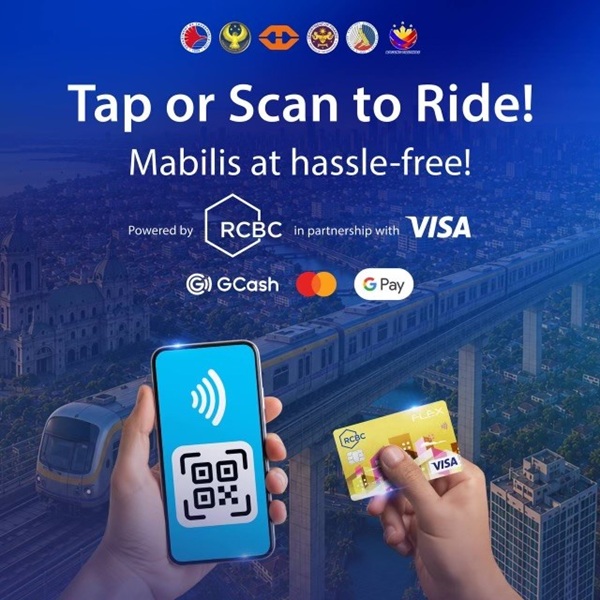
Light Rail Transit Line 2 (LRT-2) has launched the Philippines’ first rail-based automated fare collection system that combines open-loop EMV card payments, Near Field Communication (NFC) mobile wallets, and QR payments into a single interoperable platform, advancing the country’s digital public transport ecosystem.
Powered by Rizal Commercial Banking Corporation (RCBC) in partnership with Visa, the Light Rail Transit Authority (LRTA), and the Department of Transportation (DOTr), the new system allows commuters to pay fares by simply tapping Visa or Mastercard debit, credit, or prepaid cards, using NFC-enabled mobile wallets such as Google Pay, or scanning GCash QR at station gates.
The bank-agnostic platform accepts payment instruments from participating banks, electronic money issuers, and fintech providers, eliminating the need for dedicated transit cards while making rail travel faster, more convenient, and more inclusive.
Transportation authorities expect the new automated fare collection system to improve the commuting experience for more than 58.7 million annual LRT-2 passengers while supporting the government’s digital transformation and public transport modernization initiatives.
To encourage adoption, RCBC is offering its PISO Fare Cashback Promo from July 13 to July 31 for eligible RCBC Debit Card, Credit Card, and MySSS RCBC DiskarTech Debit Card holders.
According to RCBC, the project is part of its broader digital payments strategy, which includes innovations through RCBC Pulz, DiskarTech, and ATM Go. Visa added that the LRT-2 deployment is its fifth transit payment project in the Philippines, expanding secure, interoperable, and globally accepted digital payments that improve urban mobility and financial inclusion.