






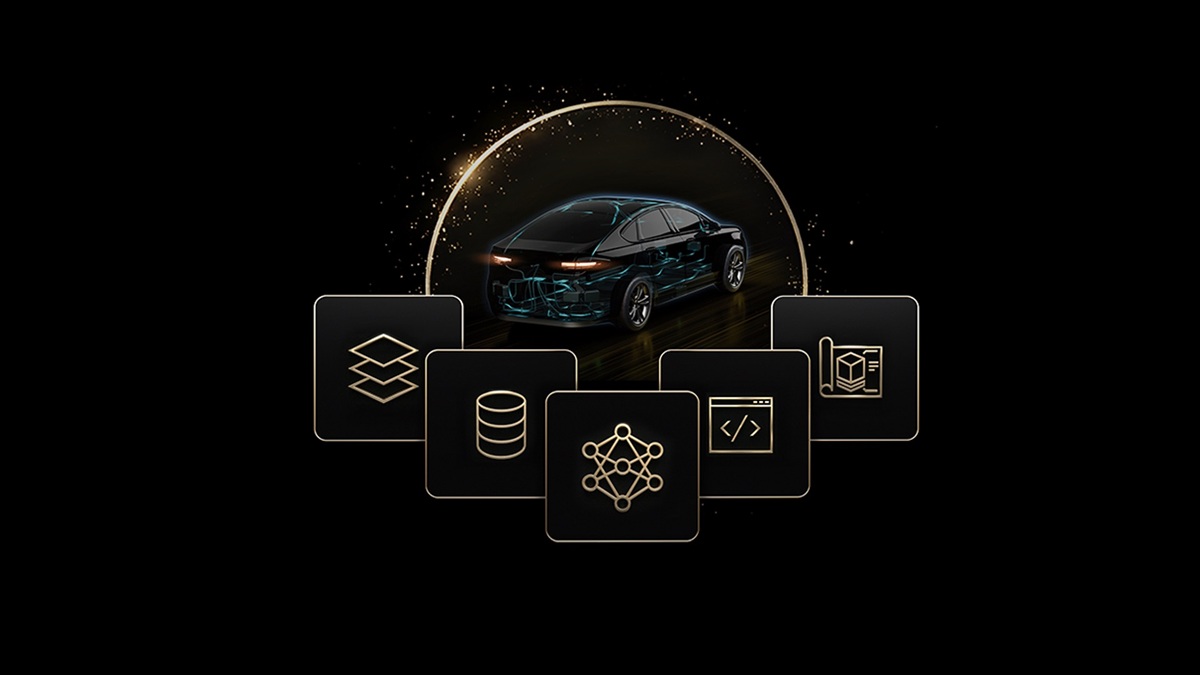
NVIDIA has introduced Alpamayo 2 Super, an open-source reasoning model designed to help accelerate the development and deployment of robotaxis and autonomous vehicles (AVs). The model is now available for commercial use and aims to address complex driving scenarios that traditional autonomous systems often struggle to handle.
Built on NVIDIA Cosmos 3 Super Reasoner and enhanced through reinforcement learning, Alpamayo 2 Super is part of NVIDIA’s Alpamayo family of open reasoning models for autonomous driving. The company said the model combines advanced reasoning capabilities with an open commercial licensing framework, enabling automakers, AV developers, and suppliers to adapt it for production deployments.
A key feature of the release is its availability under the OpenMDW-1.1 license from the Linux Foundation, allowing developers to fine-tune, modify, and commercially redistribute the model without requiring additional permissions. NVIDIA said the licensing model provides greater flexibility for organizations working with proprietary fleet data and safety-critical applications.
According to NVIDIA, Alpamayo 2 Super achieved the top ranking on the LingoQA autonomous driving reasoning benchmark, outperforming models such as Qwen2.5-VL 72B, Gemini 2.5 Pro, and GPT-4o in driving-focused reasoning evaluations.
The model processes data from full-surround vehicle cameras, enabling 360-degree situational awareness for complex scenarios such as lane changes, merges, unprotected turns, and busy intersections. It can generate multiple outputs simultaneously, including vehicle trajectories, reasoning traces, driving intentions, automated training labels, and visual question-answering responses linked to specific regions in camera images.
NVIDIA said these capabilities improve transparency in autonomous driving systems by allowing developers to inspect and validate how AI models arrive at decisions. The reasoning traces also support NVIDIA Halos safety-validation workflows and align with ISO/PAS 8800 requirements for AI safety in automotive applications.
Beyond vehicle planning, Alpamayo 2 Super can be used for automated data labeling, scene understanding, model evaluation, and knowledge distillation, helping AV developers streamline training and validation processes.
The release is part of NVIDIA’s broader open ecosystem for autonomous driving, which includes simulation tools, reinforcement learning frameworks, open datasets, and training pipelines. NVIDIA noted that the Alpamayo family has surpassed 500,000 downloads on Hugging Face, making it one of the most widely adopted open reasoning model families for autonomous driving.