








The Linux Foundation has released a Request for Comments (RFC) on the Shared AI Findings Exchange (SAFE), a proposed framework designed to help organizations share and learn from AI security incidents as agentic AI adoption accelerates.
Developed by a working group within the Open Secure AI Alliance (OSAIA), the SAFE guidelines aim to create a structured process for confidentially collecting, analyzing, and sharing information about AI-related cyber incidents and near misses. The goal is to transform individual security events into collective protection for the broader AI ecosystem.
The Open Secure AI Alliance has grown to more than 120 member organizations, including NVIDIA, Cisco, CrowdStrike, Hugging Face, and Red Hat, which contributed to the initial SAFE proposal.
Under the proposed framework, organizations would be able to identify recurring security failures, notify affected parties, and publish evidence-based recommendations to reduce systemic risks associated with AI systems and autonomous agents.
The initiative comes as enterprises face growing challenges in securing AI agents, which combine models, identity systems, tools, runtime environments, and data access mechanisms. Industry leaders argue that traditional cybersecurity approaches must evolve to address increasingly autonomous and interconnected AI systems.
Alongside the SAFE proposal, alliance members highlighted a range of open-source technologies designed to improve AI security. NVIDIA showcased tools including NOOA (NVIDIA Labs Object-Oriented Agent), OpenShell, NeMo Guardrails, and Garak, an open-source vulnerability scanner for large language models. These tools help organizations test, monitor, and secure AI agents against threats such as prompt injection, data leakage, and jailbreak attacks.
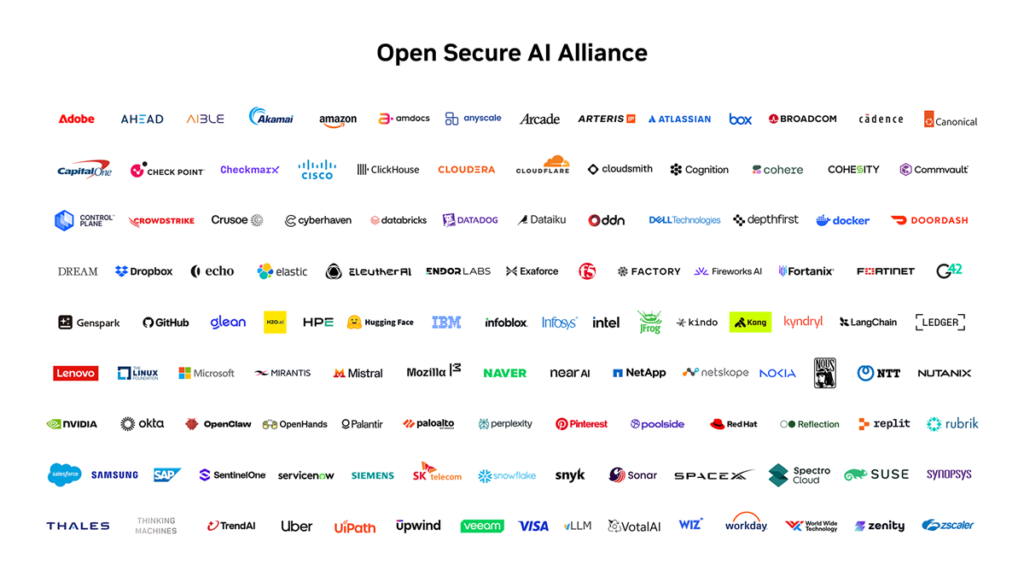
Several alliance members also introduced new security-focused projects. Amazon joined the alliance and contributed Strands Agents and the Cedar authorization framework, while Microsoft expanded its AI red-teaming toolkit with PyRIT, RAMPART, and Assert. CrowdStrike, Cisco, Palo Alto Networks, Okta, Wiz, Uber, and others also shared technologies aimed at securing AI identities, agent workflows, runtime environments, and threat detection systems.
The Linux Foundation said SAFE is intended to become a community-driven mechanism for improving AI security through shared intelligence and collaborative defense, helping organizations respond more effectively to emerging threats in the agentic AI era.