








President Ferdinand R. Marcos Jr. presides over the 9th Philippine Space Council (PSC) meeting, where key initiatives to strengthen the country’s satellite, telecommunications, and space capabilities were discussed.
Photo credit: Presidential Communications Office
The Philippine government is accelerating its space development agenda, approving plans to expand satellite capabilities, establish a national telecommunications satellite, and pave the way for future rocket launches and a domestic space industry.
During the 9th Philippine Space Council (PSC) meeting chaired by Ferdinand R. Marcos Jr., the Philippine Space Agency reported significant progress on the Multispectral Unit for Land Assessment (MULA), the country’s most advanced Earth observation satellite.
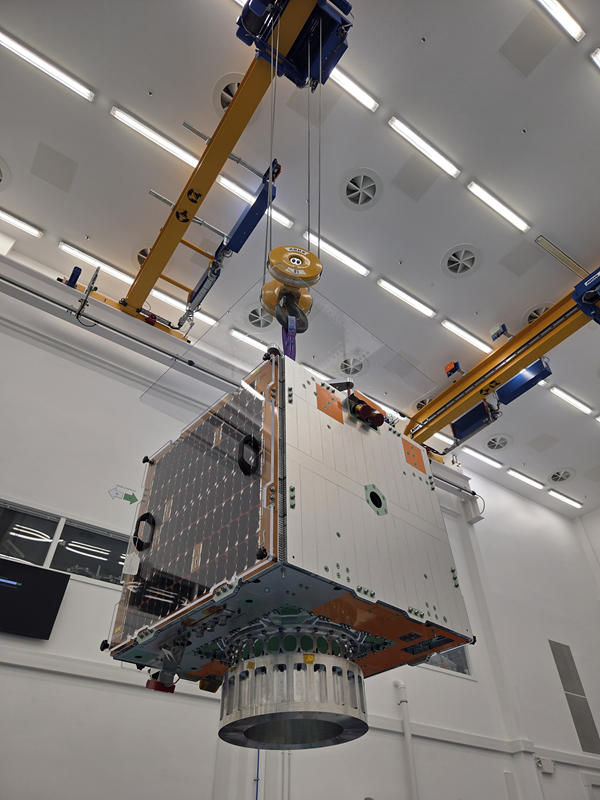
MULA’s primary satellite structure undergoes final preparations prior to integration with its high-resolution camera payload, which will support agriculture, disaster monitoring, maritime surveillance, and national security applications.
According to PhilSA Ad Interim Director General Gay Jane P. Perez, MULA has been fully built and is currently undergoing space environment testing in the United Kingdom ahead of a potential launch aboard SpaceX Transporter-20 in April 2027.
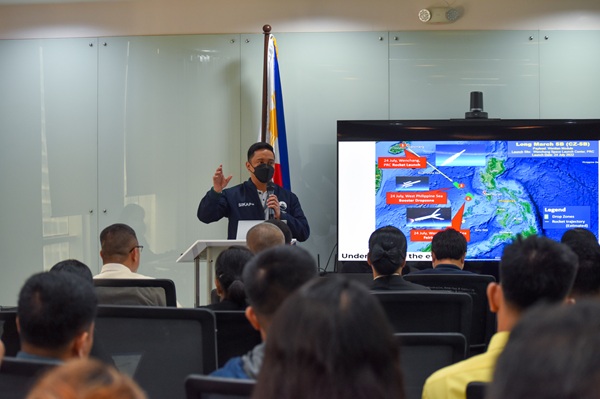
The interagency Technical Working Group on Orbital Debris is helping establish national frameworks and response protocols to manage the growing risks associated with space debris and increasing satellite activity.
The council also approved the development of a MULA satellite constellation, enabling the Philippines to build additional satellites locally under an existing technology license. The initiative aims to improve Earth observation capabilities for agriculture, maritime monitoring, disaster risk reduction and management, environmental monitoring, and national security while supporting the growth of a domestic space manufacturing sector.
Another major development is the approval of a Philippine geostationary telecommunications satellite project, which is expected to provide resilient communications infrastructure and serve as a backup network during emergencies and disasters.
The government is also targeting the country’s first liquid-fueled rocket launch by early next year from Lal-lo Airport in Cagayan. The mission is expected to demonstrate local launch capabilities, domestic propellant supply chains, and safety procedures as part of long-term plans to establish a Philippine spaceport.

PhilSA Ad Interim Director General Dr. Gay Jane P. Perez discusses progress on the MULA satellite program and other key space development initiatives during the 9th PSC meeting.
Photo credit: Presidential Communications Office
In addition, the PSC approved measures to harmonize satellite data usage across government agencies and establish a national response protocol for space debris, strengthening the country’s growing role in the global space sector.
The initiatives form part of the Philippines’ broader strategy to develop sovereign space capabilities, expand satellite-based services, and create new opportunities within the country’s emerging space economy.