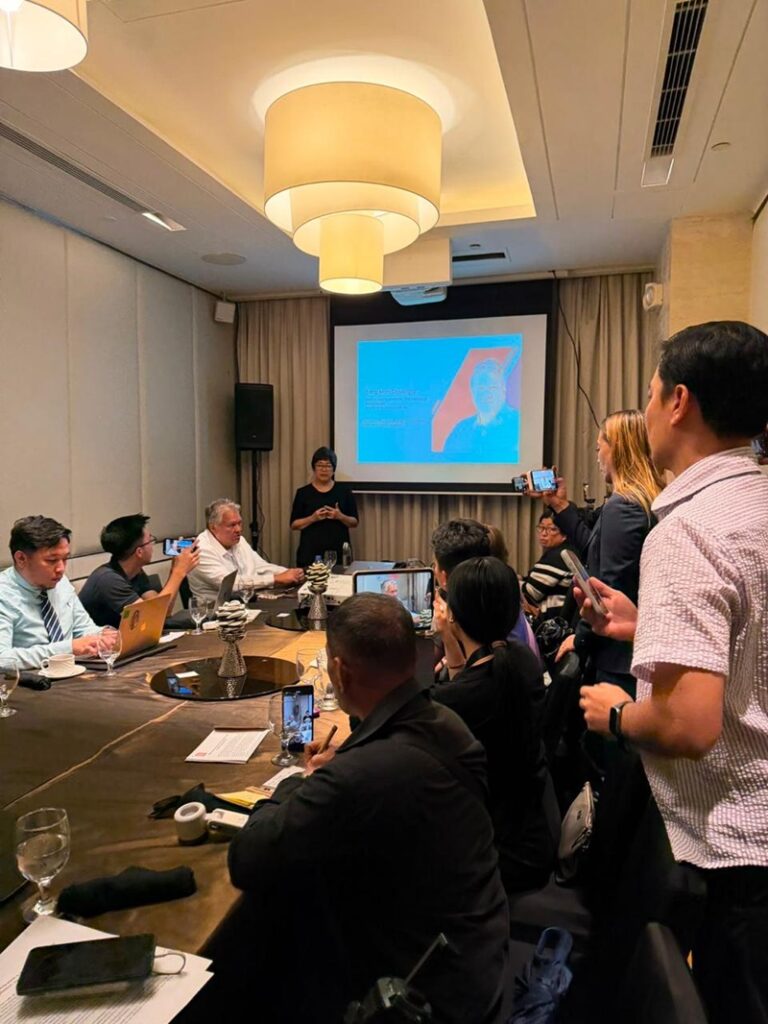








Alpas Pinas Lead Convenor Gayle Certeza, third from left, joins Rep. Mark O. Cojuangco, chairperson of the House Special Committee on Nuclear Energy and representative of Pangasinan’s 2nd District, during a recent press briefing in Iloilo City.
President Ferdinand R. Marcos Jr.’s renewed commitment to nuclear energy signals a stronger push to integrate nuclear power into the Philippines’ long-term energy strategy, according to energy advocacy group Alpas Pinas.
In his 2026 State of the Nation Address, Marcos reaffirmed nuclear energy as part of the government’s efforts to strengthen energy security, stabilize electricity supply, manage rising power costs, and meet growing electricity demand.
The renewed focus comes as the Philippines continues to rely heavily on fossil fuels. According to data cited by Alpas Pinas, coal accounts for more than 60% of the country’s electricity generation, while natural gas contributes another 18%. The Department of Energy also reported an average electricity rate of ₱12.43 per kilowatt-hour in June 2026, the highest among Southeast Asian countries cited by the group.
Alpas Pinas said nuclear power could provide a low-carbon baseload energy source capable of supporting the country’s growing electricity requirements while reducing dependence on fossil fuels and exposure to fuel-price volatility.
Gayle Certeza, lead convenor of Alpas Pinas, said the government must now translate the policy direction into concrete measures, including establishing the necessary regulatory institutions, developing nuclear-sector expertise, and providing the public with evidence-based information.
Meanwhile, Congressman Mark Cojuangco, principal author of House Bill No. 8567, or the PhilAtom Bill, described the President’s statement as a landmark moment for nuclear policy. The proposed legislation seeks to establish incentives and a policy framework for integrating nuclear power into the country’s electricity sector.
With electricity demand continuing to rise, the nuclear push places greater emphasis on advanced energy technologies as the Philippines seeks a more reliable, low-carbon and secure power system.