







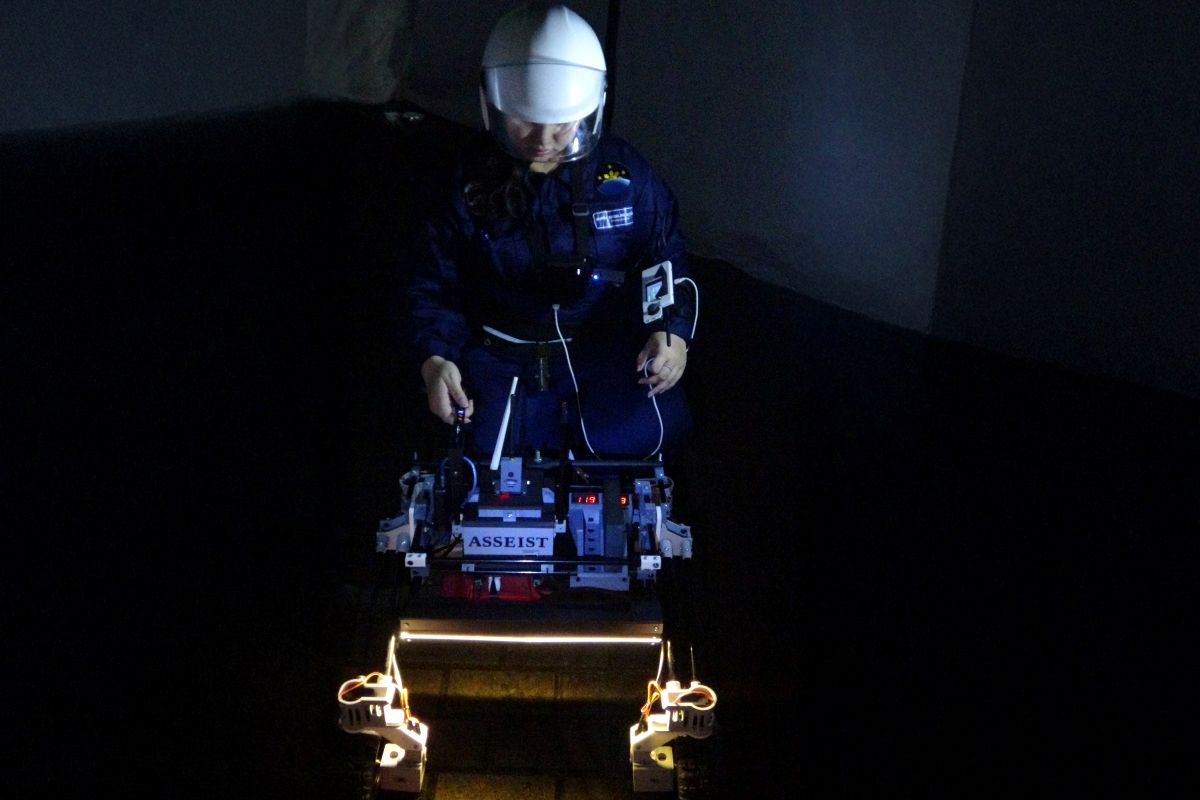
An Analog Habitat Waypoint mission crew member conducts experiments using BatStateU’s rover to explore potential applications in emergency response, communications, and other scientific operations.
The Philippine Space Agency (PhilSA) has completed the country’s first Analog Habitat Waypoint (ANAHAW) mission, bringing together an all-Filipino crew to test spaceflight-related systems, procedures, and human factors in a simulated lunar habitat.
Conducted in partnership with Batangas State University (BatStateU) – The National Engineering University, the 24-hour mission concluded on September 26, 2026, at the BatStateU Alangilan Campus. The mission served as a benchmarking study for university-based analog missions in the Philippines.
Analog missions recreate selected conditions of spaceflight and lunar or Martian habitats on Earth. They allow researchers and crew members to evaluate technologies and procedures, study crew dynamics, conduct scientific experiments, and improve operational readiness without leaving the planet.
Simulating challenges of space missions
For ANAHAW, the simulated lunar habitat environment was designed to recreate challenges associated with space missions, including isolation, limited resources, communication delays, and emergency situations.
The six-member crew represented several disciplines:
- Suguru Vaughn Hernandez — Mission Commander
- Nathaniel Macato — Flight Engineer
- Bianca Angeline Alcantara — Mission Scientist
- Yzhae Marrione Villaruel — Mission Scientist
- Jeremaine Ko — Communications Officer
- Mary Audrey Amorao — Health and Nutrition Specialist
The crew was supported by the Mission Control Center, including Flight Director Leemar Bonite, Capsule Communicator Cindy Lou Macahilos, and Science Technical Officers Angelo Manigo, Catherine Raisa Mandigma, and Erica Mae Santos.
Testing human-robot collaboration and space technologies
During the mission, the crew carried out scientific experiments and technical demonstrations covering several areas relevant to future human spaceflight.
These included human-rover collaboration, crew welfare mentoring systems, crew dynamics during emergencies, surface microbial sampling, and ground-based germination screening of Philippine food crops.
The experiments provide opportunities to examine how crew members interact with technologies and one another while operating under conditions designed to approximate selected constraints of space missions.
Before entering the simulated habitat, all participants completed a six-part learning series on analog missions earlier in 2026. The program covered analog mission concepts and operations and concluded with an assessment and group pitch designed to test technical understanding and teamwork.
Kristine Atienza, recognized as the first Filipino analog astronaut, provided technical inputs for the mission concept, led training sessions, and mentored the crew.
Building a Philippine analog mission ecosystem
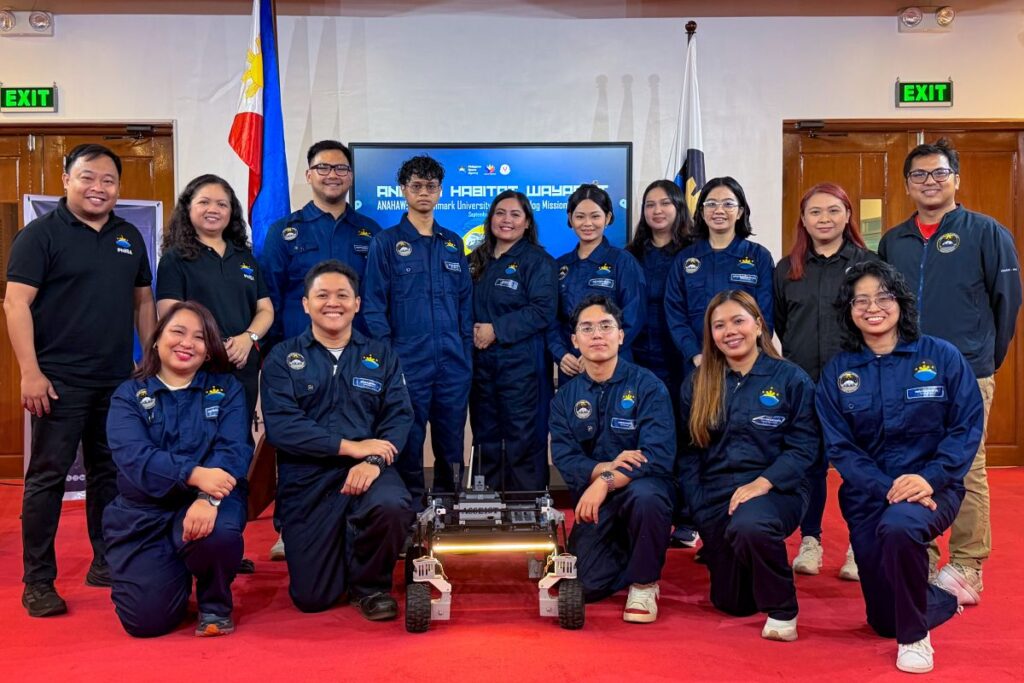
[L-R, standing] Philippine Space Agency (PhilSA) Interdisciplinary Space Missions Development Division (ISMDD) Chief Ernest Macalalad, Ph.D.; PhilSA Acting Director General Gay Jane P. Perez, Ph.D.; ANAHAW Mission Commander Suguru Vaughn Hernandez; Flight Engineer Nathaniel Macato; Communications Officer Jeremaine Ko; Health and Nutrition Specialist Mary Audrey Amorao; Mission Scientists Bianca Angeline Alcantara and Yzhae Marrione Villaruel; and Philippine analog astronauts Kristine Jane Atienza and Dr. Mark Angelo Purio of the Community of Human Analog Space Missions (CHASM); [L-R, kneeling] Science Technical Officers Catherine Raisa Mandigma and Angelo Manigo; Flight Director Leemar Bonite; Capsule Communicator Cindy Lou Macahilos; and Science Technical Officer Erica Mae Santos.
PhilSA said the inaugural ANAHAW mission provides initial insights into experimentation, analog mission operations, and habitat development, helping establish a framework for future missions and develop local expertise in human spaceflight support systems.
The agency plans to replicate the program in succeeding years at more Philippine universities. The initiative is intended to encourage academic institutions to contribute expertise, knowledge, and resources to the country’s growing space science and technology ecosystem.
“Over time, we hope to build the Philippines into a regional hub for analog missions, a place where people can come together to train, conduct research, and cultivate the knowledge and skills needed for human spaceflight,” said PhilSA Acting Director General Gay Jane Perez.
ANAHAW forms part of a broader pathway toward Filipino human spaceflight capability, spanning analog missions, space science experiments, astronaut selection, and eventually training for actual spaceflight.
Filipino experience in international analog missions

President Marcos (center) with PhilSA Acting Director General Perez, Director Reinabelle C. Reyes, and PhilSA Chief Science Research Specialist Ernest Macalalad with the Philippine analog astronauts (L-R) Dr. Purio, Pauline Basubas, Dr. Alcantara, and Kristine Jane Atienza during the courtesy visit at Malacañang Palace. Photo credits: President Bongbong Marcos.
The Philippines has also developed experience through Filipino participants in international analog programs.
Filipino analog astronauts Kristine Jane Atienza, Dr. Marvic Jon Alcantara, Florence Pauline Basubas, and Dr. Mark Angelo Purio have participated in programs including Hi-SEAS in Hawai’i, the LunAres Analog Mission in Poland, the Monsaraz Mars Analog Mission in Portugal, and the ADAMA Analogue Astronaut Mission in Australia.
Their experiences have provided exposure to crew operations, habitat systems, scientific research, and the challenges of conducting long-duration missions in isolated environments.
PhilSA said these experiences are being complemented by mentorship and public outreach as the country develops its own analog mission capabilities.
“That journey continues with our first all-Filipino analog mission team. PhilSA intends to build on this by bringing together more universities, researchers, students, and professionals to conduct analog missions, develop experiments, test technologies, and learn from one another,” Perez said.
Following the successful ANAHAW mission, PhilSA aims to expand opportunities for Filipino researchers, students, and professionals to participate in analog missions and contribute to the development of technologies and systems supporting future human spaceflight.